Tuesday, January 18, 2022

Federal Reserve: Shifting Leaders, New Problems

Jerome Powell was reappointed as Federal Reserve Chair by President Biden, but it is being accompanied by major changes. The focus on employment and recovery has shifted to inflation. The Fed has been slow moving in its reaction to higher inflation. Last fall, it reduced proposed quantitative easing by June, now the end date is March with three rate hikes tossed in during 2022 (some speculate 6 quarter-point increases).

The inflation that was called transitory is now identified as much more sustaining and likely to stay above (likely well above) 2 percent throughout the year. The political impact of inflation may be even greater than that of unemployment. People see it at the gas pump ($5.00 a gallon) and the grocery stores ($15 per lb. bacon). Plus, it’s hard to be concerned about unemployment when jobs are going unfilled and wages are rising rapidly.

The Fed was late, but now the challenge is to brake, but not cause a crash.

Friday, January 7, 2022

Trends and Predictions: Colorado Election Experts Start the New Year

The Crossley Center at DU presents a Zoom conversation on January 13, 2022 at 11:00 am MT with a panel of top political, policy and academic experts discussing the political terrain in Colorado for the 2022 elections. Will the national trends boost local Republicans? Will Senator Bennet or Governor Polis be vulnerable? Which party has the advantage in the new congressional district? 

“Colorado Election 2022: Trends and Predictions” will be presented virtually via Zoom at 11:00 am (MT) on Thursday, January 13, 2022, by the University of Denver’s Crossley Center and the Center on American Politics at the Josef Korbel School of International Studies.

Crossley Center Director Floyd Ciruli and the panel will highlight national and local political and public opinion trends and how they will affect the Colorado election. Panel participants:

  • Dick Wadhams, Denver Post columnist, CBS4 commentator, consultant, Republican
  • Sheila MacDonald, Consultant for candidates, local and statewide ballot issues, Democrat
  • Melanie Layton, State legislative lobbyist for more than two decades
  • Seth Masket, Professor and director of DU’s Center on American Politics

Join the Conversation
Thursday, January 13, 2022
11:00 am MT

REGISTER HERE

The Crossley Center’s public engagement programs aim to attract thought-leaders and policymakers with diverse perspectives and backgrounds to participate in an informed and civil public conversation. The purpose is to give DU audiences and Coloradans an understanding of the major influences affecting their politics and policies.

Denver Loves Its Libraries

Denver voters and civic leaders love their libraries. They have invested millions since the 1990s to create one of the largest and most used systems between Chicago and Los Angeles.

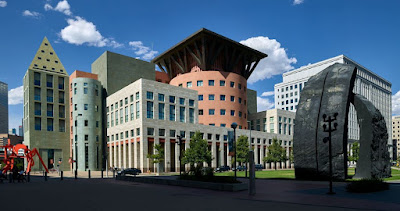
DPL Central Library

Ciruli Associates, working with the city’s head librarian Rick Ashton and the Denver Public Library’s (DPL) team of managers, appointed directors, volunteers and donors, directed the campaign. The effort began in the late 1980s and culminated in a successful election in 1990. Denver voters approved a $91 million new central library by 75 percent.

It was completed in 1996. Michael Graves, a leading postmodern designer and architect, incorporated the building from the 1950s by local architect Burnham Hoyt into a new structure that has a unique exterior design and a functional and beautiful interior.

DPL Branch Libraries

But that was just the beginning of supporting the library system. In 2007, a $56 million bond was approved by voters during the Hickenlooper administration and Head Librarian Shirley Amore. The Library’s money went to upgrading its extensive branch system. Ciruli Associates provided research for the overall $550 million citywide infrastructure bond and managed the Library’s campaign. Since then, the DPL has been part of several subsequent bonds and revenue approvals by voters, including one in November 2021.

Ciruli Associates and Libraries

Working with DPL managers and supporters has been one of Ciruli Associates’ most satisfying efforts. The Library is a legacy project that contributes to Denver being a very special city.

DPL Central Library | Photo: City and County of Denver

Economy is Strong, But Americans Pessimistic

As growth surged toward yearend, it’s clear the American economy in 2021 was one of the best performing in the world and as strong as it has been since before the Great Recession of 2008-09. The S&P market index was up 27 percent, the largest gain in 20 years; unemployment fell to 4 percent by year’s end; wages are trending upward, with employees in demand; and the GDP projected to reach 5 percent in 2022, although after a slow start due to the continued pandemic.

But, there still is uncertainty with inflation ending the year at above 6 percent and the newest Covid variant, Omicron, causing record-high hospitalizations and a quarter of the public stubbornly anti-vaccination.

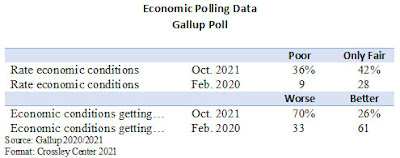
A comparison of Gallup’s economic polling data from late 2021 and February 2020, just before news of the pandemic was broadly reported, is significant. A “poor” rating of the economy grew by 27 percent over the period and “only fair” was up 14 percent. The shift came from “excellent” and “good” ratings that dropped similar amounts from early 2020.

A review of Gallup’s near monthly reporting of the data shows that the shift to the negative view on economic conditions on both measures took place starting in the early summer of 2021 as the Covid Delta variant emerged.

The public’s view of future economic conditions is equally down and reflects a major shift since before the pandemic, with 70 percent of people currently rating the economic conditions as “getting worse” compared to 33 percent in February 2020 and only 26 percent currently saying they are improving versus 61 percent in early 2020.

The pandemic and its affect on the public is shaping the public’s view of the economy more than much of the good end of year economic news.

Thursday, January 6, 2022

Protecting Colorado’s Water

Protecting and putting Colorado’s water to beneficial use has been a priority and a challenge since the state’s founding. It continues today in the face of significant growth in the West and the disruption of climate change.

Water Wars in the West

In 1977, my first task in Washington D.C. as a junior member of Congressman Frank Evans’ legislative staff was to organize opposition to newly inaugurated President Jimmy Carter’s budget cuts of Western water projects. Western states banded together to save funding and won the immediate fight, but it was clear that project financing from Congress was declining and regulations from environmental agencies was increasing. The change was reinforced in 1991 when the long-planned Denver metro region Two Forks project was stopped by the U.S. Environmental Protection Agency (EPA).

But Western water leaders are adaptable and they focused on developing water storage and conservation projects with in-state financing and commitments to environmental negotiations, management and mitigation.

Water Projects of the 21st Century

The great Colorado drought of 2002-03 highlighted the need for action and launched a creative and collaborative series of projects. Built since were the Southern Delivery System project of El Paso County and adjacent areas, the Prairie Waters project of Aurora, the Northern Water’s Windy Gap Firming and Northern Integrated Supply Project (NISP) of northwest Colorado, and Gross Reservoir expansion of Denver Water. They are examples of that represent $5 billion in investments, mostly from Colorado tax- and rate-payers.

NISP and Rueter-Hess Reservoir
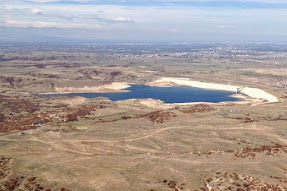
Rueter-Hess Reservoir
Our firm, Ciruli Associates, has assisted a number of major projects, including NISP in 2008 at the beginning of the project’s supplemental EIS work through the last couple of years, culminating in state and federal permits. In 1998, we joined Frank Jaeger and his team at Parker Water and Sanitation District to bring the Rueter-Hess Reservoir and Jaeger Dam into completion, establishing the primary infrastructure and storage and water management in the South metro area. In addition, the project was designed to collaborate with agriculture in the Logan County area and with the Water, Infrastructure and Supply Efficiency (WISE) partnership linking together Denver regional water sources and providers.

Colorado Water Congress

Since the 1990s, we have been involved with the state’s primary water association, the Colorado Water Congress, specifically to monitor and educate the public on water ballot issues that could affect water laws and investments in Colorado.

Ciruli Associates and Water

The importance of protecting Colorado’s water and making effective use of it for citizens remains a state priority as it enters a new decade. This work was among our firm’s most valuable contribution to the state and highly professionally rewarding.

Steve Bannon and the January 6 Insurrection

Steve Bannon, pardoned for crimes in the White House, but indicted for refusing Congressional subpoenas, played a key role in spreading the “Big Lie” as reported by the Brookings Institution (1-14-22). Along with nearly nonstop podcasting election misinformation from August to January 202-21, he manned a “war room” (the name of his podcast) from a suite in the Willard Hotel with a group of former President Donald Trump’s political operators, family and friends. He was closely involved with the rally and storming of the Capitol. January 6, 2021 was a Steve Bannon-type of day.

Steve Bannon speaks to reporters after leaving federal court, 
Washington, Nov. 15, 2021 | Alex Brandon/AP

America’s Growth Stops, But People Keep Moving

The Census Bureau population estimates during the height of COVID-19 from July 1, 2020 to July 1, 2021 showed that U.S. growth dropped from an average of 2 million new residents a year to less than 400,000. The population freeze reflects changes in all three of the major components of growth: deaths, births and immigration rates. The major impacts were COVID-19; changes in fertility rates, mostly from an aging population; and much more restrictive international immigration policies. 

Colorado Grows

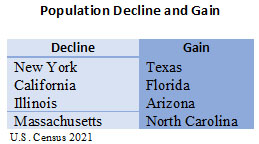
In spite of the overall slowdown, some states keep gaining population, for example, Texas increased by 310,000 and Florida up more than 200,000, and no surprise, some keep losing, like New York down 319,000 and California losing 215,000 residents. Colorado gained about one percent in population during the COVID-19 year. The fastest growing states in the West were: Idaho (up 3%), Montana (2%), Utah (2%) and Arizona (2%).

Immigration Down

America’s population bust is making at least some contribution to the staffing shortages since international immigration remains low, even with high-profile surges on the Texas border, which so galvanizes the state’s governor and national politics. The new resident total of 245,000 is half the size of the previous year (477,000) and down from more than one million in the pre-Trump era.

With an aging population and limited immigration, lower population growth is likely to be a feature of the next decade.