 Johnston and Mamdani in New York for the Urban20 Summit. Photo: Mike Johnston for Mayor
Tuesday, September 29, 2026
All Big City Mayors Need a Mamdani Picture
Johnston and Mamdani in New York for the Urban20 Summit. Photo: Mike Johnston for MayorMonday, September 28, 2026
Polling Asserts Its Purpose

Using a random sampling and door-to-door interviewing 90 years ago, three pollsters predicted a Franklin Roosevelt win. He won in a landslide. Since that dramatic beginning, polling has become a multi-billion dollar industry that dominates politics and political reporting in most advanced democracies.
Do the purposes and benefits that the pioneers articulated still hold? The founding troika of George Gallup, Elmo Roper and Archibold Crossley wanted to get the common American into the room where political decisions were made. They had a strong desire to counter special interests with popular opinion. Gallup, in particular, articulated the benefit of being able to focus on specific issues and providing insights between elections.
It took the missed election result in 1948 when Thomas Dewey was predicted to be the winner that Harry Truman said famously, “That’s not how I heard it,” to motivate pollsters to form an association to improve standards and address inadequacies in methods.
Polling’s purposes and credibility will be discussed at the Tuesday Morning Class (DCC) and Denver Press Club on October 13.
Friday, September 25, 2026
Georgetown Law Stepped Up During Watergate
 As he boards the White House helicopter after resigning the presidency, Richard M. Nixon smiles and gives the victory sign. Photo: Bettmann Archive/Getty Images
Georgetown Law worked tirelessly in the late 1970’s to improve the legal environment post-Watergate. One example, in 1976 Sam Dash, who famously was chief counsel for Senator Ervin’s Watergate Committee, taught a strengthened ethics class.
During and after Watergate, Georgetown Law professors and alumni were heroes in the effort to strengthen statutory and legal norms and conventions that had been disregarded and violated. Recall that the Attorney General and White House Counsel went to jail with many other attorneys. Professors from numerous law schools assisted in court cases with Judge Sirica; they aided the Ervin and Rodino committees and worked for years on statutory remedies.
Georgetown Law and other top law schools who were so productive in the 1970’s have a model to help restore the legal and legislative guardrails as America moves beyond 2026.

Monday, September 21, 2026
Polling’s Difficult Season
 A record crowd of more than 250 people attend Amb. Chris Hill and Floyd Ciruli
presentation after the surprise 2016 election to review the polling and
forecasting of the national and international fallout.
A record crowd of more than 250 people attend Amb. Chris Hill and Floyd Ciruli
presentation after the surprise 2016 election to review the polling and
forecasting of the national and international fallout.The Trump era has been especially challenging for public opinion polling and its media sponsors. The problem was dramatically highlighted in November of 2016 when polling had shown Hillary Clinton winning the voting population by 2 to 4 points (she won by 2.1%) and was projected to carry the electoral vote by 100 or more. She lost it famously by 77 in Wisconsin, Michigan and Pennsylvania.
I had the opportunity with the DU Korbel School Dean Christopher Hill to describe to a very unhappy audience what happened. See picture above at DU’s Maglione Hall.
This has been another difficult year for polling. Talking about polling’s purpose, usefulness and efforts to get it right will take place on October 13 at the Tuesday Morning Class(DCC) and later at the Denver Press Club.
Wednesday, September 16, 2026
Georgetown Law Reunion – Class of 1976
 Georgetown University Law Center
The law class of 1976 went through the Watergate scandal, Richard Nixon’s resignation, and the 1974 November Democrat landslide (49 new seats – Watergate Babies). Colorado politics was changed for generations with a new Democratic governor, Dick Lamm, a new Senator, Gary Hart, and a new Congressman, Tim Wirth.
Our class joins hundreds of reunion classmates in two weeks and many will ask if the 2026 election will bring a new congressional class dedicated to again restraining an Imperial Presidency.
My visit will also allow a quick visit to the White House and new ballroom and Lincoln memorial and the reflecting pool – old and new sights in the news.
Tuesday, September 15, 2026
Metro Denver Sales Tax Revenue Growing
The sales tax revenue in the seven-county Denver metro area in 2025 was up 1.47% above 2024. That was a continuation of the modest improvement in 2025 after two years of flat sales tax growth in 2023 (0.5%) and 2024 (0.1%).
The total revenue collected in 2025 was $87.5 million from one-tenth of a cent provided the Scientific & Cultural Facilities District (SCFD). As of July 2026, the District is slated to receive $51 million or a 2.7% increase. That will likely add about $2 million to the 2026 total revenue or $89 million. The District diverts for administration and statutory obligations about $2 million per year.

Monday, September 14, 2026
Colorado Ballot Leans Right on Culture and Left on Taxes
 Colorado State Capitol | Photo: Library of Congress Carol Highsmith
Not since 1992 and the historic TABOR Amendment has there been more important tax and spending propositions on the ballot. This year, the 14 propositions lean both right and left in terms of their purpose and supporters.
Ten of the propositions are cultural in nature. They all lean right and are sponsored by conservative organizations (e.g. Advance Colorado). Among the four propositions that are related to government funding three are backed by liberal groups and causes (e.g. Bell Policy Center, education and conservation groups). One conservative tax-related proposition is on the ballot, a protection of the flat tax which counters the graduated income tax proposal (Advance Colorado).

Tuesday, September 8, 2026
School Districts Ask Millions in Operating Funds
 Students head into Newlon Elementary School to begin the 2026–27 Denver Public Schools school year on Monday, Aug. 24, 2026, in Denver. (Photo by RJ Sangosti/The Denver Post)
Colorado’s 3 largest school districts join more than a dozen others putting local property tax increases on the ballot for operating costs.
DPS wants $44 million mill levy override
Douglas $54 million
Jefferson $133 million
The funding is primarily for teachers’ salaries and other programs and services.
Jessica Seaman reports in the Denver Post about the school district requests and the obstacles they face. Political consultant Steve Welchert believes the measures must deal with a flat economy and a crowded ballot.
Also, along with a myriad of local tax measures, several statewide tax propositions attempt to raise revenue for K-12 education (Prop 195, NN). However, I pointed out that in spite of challenges, Colorado voters have been generous to schools and teachers in recent years.
“Affordability is the No. 1 issue politicians are talking about this election, but Coloradans historically tend to support increasing tax revenue for schools,” pollster Floyd Ciruli said.
“The public tends to be fairly generous with teachers and education – continuing to value it and continuing to increase the property tax load,” he said.
Thursday, September 3, 2026
Should Polls be Banned?

Polling has had a difficult summer. The Michigan and Wisconsin primaries’ polls were off by more than ten points. There have been reports of fake polls, dozens of new pollsters with no track record, and the end of live phone interviews.
Floyd Ciruli, a longtime Colorado pollster and adjunct professor of polling, will address the problems with the Tuesday Morning Class on October 13 at the Denver Country Club.
Many European states regulate polling but it is mostly the wild west in the U.S. Among my topics: Is polling in trouble or is this year not much different than past mid-term primary elections? And, as Coloradans get ready to vote, what should they look for to judge good, shoddy or fake polls?
Wednesday, September 2, 2026
Can Democrats Go for Eight?
 The U.S. House district map.
 Image: 9News via Colorado Independent Redistricting Commission
As President Donald Trump's approval rating drops below 40% (FiftyPlusOne 36%) and the generic congressional ballot test hits 6 points and higher for Democrats, the possibility that Colorado Democrats could aspire to winning more than just the toss-up 8th district comes into view.

The DC-based rating services consider that after Congressman Gabe Evans’ district (Democrat Manny Rutinel) the next most vulnerable is Republicans Jeff Hurd on the Western Slope 3rd and Jeff Crank in the El Paso-based 5th. But for Democrats to be competitive it will require high quality, well-funded candidates with some of the populist anti-DC, anti-establishment politics that's shaking up congressional races today.
The Lauren Boebert 4th CD would be the most difficult to be competitive in based on past performance. But Democrats argue this is the year to shoot for the moon. And indeed they have some credible candidates in all three longer-shot races (Democratic candidates: Dwayne Romero, 3rd, Eileen Laubacher, 4th, Jessica Killin, 5th).
Also, with the likelihood that Senator Michael Bennet won't run again in 2028 after his 14 point loss to Phil Weiser for governor, no doubt has Joe Neguse, Jason Crow and Brittany Pettersen thinking about the U.S. Senate.
Tuesday, September 1, 2026
National Dashboard: Government of Uncertainty
 President Donald Trump displays a signed executive order during an event in the Oval Office of the White House, August 27, 2026 in Washington. Photo: Andrew Harnik/Getty Images
Peggy Noonan called it a presidency in a persistent state of precarity. Her takedown of his behavior was titled "Trump is starting to look precarious". Americans agree. In the last month he has lost support and is now 40% approval on the conservative website RealClearPolitics. On the more neutrally curated site FiftyPlusOne, his approval is 36% with disapproval of 60% - a 24-point net negative, and a record low.

The latest House midterm projections show Democrats winning between 23 to 29 seats. They need 3 to take a majority.

Key factors helping the Democrats:
- Trump approval now at or below 40%.
- The generic ballot test about 6 for Democrats.
- The persistence of the war in Iran and its effect on the economy.
RELATED:
Midterm Panic July 22, 2026
Trump Doesn’t Have the Cards May 26, 2026
National Dashboard: Iran Takes Trump Down April 6, 2026
National Dashboard: Trump in Retreat Feb 23, 2026
Trilogy on Trump’s Declining Approval Dec 15, 2025
Trump Approval Collapses and November 4 Turns Blue Nov 20, 2025
Wednesday, August 26, 2026
Generation Gap is Wide
 D1 candidate Melat Kiros' supporters cheer as a second round of election results dropped in her favor, widening her lead over incumbent Diana DeGette. June 30, 2026.
 Photo: McKenzie Lange/CPR News

Thursday, August 13, 2026
Origin and Purpose of SCFD Tiers
The concept of three funding tiers in the metro Denver area Scientific and Cultural Facilities District (SCFD) evolved after the district’s initial legislation was rejected by the Colorado legislature in the mid-80’s. Major cultural groups were unable to reach an agreement on the levels of funding prior to the first State Senate committee hearing.
The primary purpose of the legislation was to replace state and municipal funding for Denver’s major regional cultural facilities – the Denver Natural History Museum (now Denver Museum of Nature and Science), the Denver Zoo (now Denver Zoo Conservation Alliance), the Denver Art Museum, and the Denver Botanic Gardens. This group became Tier I with a set formula and an agreed division among the participants.
Sponsors and supporters recognized that as a regional tax district, the six suburban counties (now seven) should participate directly in funding and receive support for their local cultural organizations. They became the original second tier (later designated Tier III). Counties received funds to participate relative to the amount they contributed to the regional tax and within the purpose of the statute. Local elected officials (county commissioners) controlled distribution of those funds.
But a group of Denver-based cultural organizations wanted to share in the possible new tax dollars. The group was led by the Colorado Symphony and the Denver Center for the Performing Arts (DCPA) and included the Arvada Center for Arts and Humanities, two opera companies (Central City and Denver), the Denver Ballet (now Colorado Ballet), as well as the Children’s Museum. They were privately run nonprofits (except for the Arvada Center) that had received some government grants but not regular tax dollars. Additionally, they lacked broad regional appeal and had little track record of using tax dollars. The dominant impression of these group was that they procure their own support, mostly from wealthy patrons and donors.
The regional tax concept for cultural facilities was already a stretch for most Colorado legislators. Even though the four main Denver facilities had received regular tax funding from Denver and appropriations from the State – both funding streams ended or were greatly diminished in the 1980’s. This new group, which became labeled in the legislation as Tier II, had several statutory rules attached to make their entrance onto the tax rolls more acceptable and accountable. An annual threshold of $700,000 per organization was set and the amount received was based on an audience and budget audit. The intent was to promote access by creating an incentive for increased attendance, and also to demonstrate that the public attached particular value to the facility (i.e., ticket and attendance revenue). Budget requirements were important to ensure each would continue private development efforts. The concept would help attract audiences and avoid stagnant, narrow missions.
Does the Tier concept maintain value today?
- Tier I continues to reflect the largest public investments in cultural infrastructure in the seven-county Denver metropolitan area. The Tier I institutions (now numbering five with the addition of the DCPA) are both the repositories and stewards of the largest, most visited and valuable cultural assets in the metro region, charged with processing, interpreting and disseminating the region’s cultural heritage.
- The collections held by the DMNS, DAM, DBG and Zoo within Tier I are huge curations of art, natural history, plants and animals, and monetarily worth a staggering amount (billions). But beyond that, they play a vital role in maintaining and sharing the communities’ cultural identity and history.
- The physical structures Tier I organizations inhabit have been enhanced and expanded over the years through significant investment by private donors and Denver property taxpayers. They are cultural monuments and serve as the central social infrastructure in the community.
- Tier I is still highly favored in public opinion. The organizations are identified as the best known and most popular cultural institutions in the region in repeated polls and most recently in a 2025 poll (see chart below).

Ultimately, SCFD awards are public taxpayer dollars. When the SCFD goes to voters for its periodic extensions, it must compete against other priorities for public funds. Organizations must justify the extraordinary grant of tax funding and demonstrate continued value to voters.
Monday, August 10, 2026
SCFD: Permanent or Term Limited
 Photo: Steve Gadomski
/
Adobe Stock
Photo: Steve Gadomski
/
Adobe StockShould the Scientific & Cultural Facilities District (SCFD) tax be permanent or continue the use of voter-approved term limits?
- The use of a term limit on the SCFD’s 0.1% sales tax was begun because many political leaders and others were concerned about giving permanent dedicated tax funding to potentially hundreds of mostly non-government entities with private boards, many with little or no track record of receiving government funding (aside from occasional grants for specific projects) without a voter check on the program. Legislation behind the term limit was to increase accountability of tax revenue spending over a specific time period. Use of a term limit provided an argument that if there was misuse of funds or if the program failed to achieve its purpose, voters could end the tax.
- The term was seen as a major incentive to keep the recipients and programs focused on their cultural missions while also providing maximum accessibility and careful money management.
- A term was also used to provide certainty in funding over a specific time period for planning and financial commitments to support major exhibitions, performers, and other programming.
- Most of the SCFD statutes’ funding was not a grant program. It was considered important to place the formulas in the voter-approved statute to avoid the experience of the 1980’s National Endowment for the Arts’ grants controlled by the tastes and preferences of art connoisseurs, interest groups, and politicians. Formulas avoided authorities’ ability to skew the funding for unspecified purposes. Only the legislature and voters could change them, not at a terms renewal.
- A renewal at the end of a term limit provides a period where the statute and formulas can be improved and updated by the legislators and voters.
- When asked a choice question in a past-poll, voters preferred a term limit over permanence. (See table below.)
| Voters’ Views on Sunset Provision | Total | Dem. | Inde. | Rep. |
|---|---|---|---|---|
| Sunset: The cultural district has a sunset provision that means every twelve years or so metro residents get to vote for or against extending the tax. They have extended it three times in elections starting in 1988. [ROTATED]. | ||||
| The district tax should be made permanent. The voters support it, it’s needed and it works. We don’t need more elections to extend the tax. | 20% | 24% | 16% | 19% |
| The district tax should be voted on every 12 years or so to make sure it keeps working the way we want it to and is still needed. | 78 | 72 | 82 | 78 |
Thursday, August 6, 2026
Operational Guidelines Sustaining the SCFD’s Exceptional, Envied Funding Model

The Scientific & Cultural Facilities District (SCFD) is the Denver metro area’s nationally recognized source of regional funding for cultural facilities and programs. It was from the beginning designed with important guidelines that have maintained it as a unique and nationally envied model. As it approaches a 2028 renewal campaign, it will be important to keep them front and center.
SCFD Operational Guidelines:
- Ensure regionalism and incorporate all counties and cities. Seven counties are represented in its governance. Counties receive funding equal to local sales tax revenue contributions. Their appointed citizen boards direct their own grant programs.
- Establish and maintain a modest tax level. The revenue collected has grown with the region—from $14 million to $84 million—while the sales tax rate of one-tenth of a cent has remained the same. Don’t make the tax an affordability burden or a competitor among other public needs.
- Maintain frugal administration. Maximize funding for cultural organizations and minimize the overhead of central bureaucracy. Limit culture-related micromanagement and consultant add-ons.
- Protect cultural organizations from politics. Avoid political and ideological regulation from cultural elites, elected officials, planning staffs, or consultants.
- Use statutory formulas to ensure dedicated funding. Prevent vulnerability to special-interest lobbying for funds and frequent formula changes.
- Incentivize organizations to increase access to cultural offerings. Support broad socioeconomic audiences’ experience of high-quality performances, exhibits, and popular programs. Utilize budget and attendance funding formulas for Tier II-qualified cultural organizations.
- Maintain county-based grant programs. Ensure county-level grants are community-guided and accountable to elected officials.
- Embrace diverse cultural offerings. Establish a broad statutory purpose test to ensure diverse arts and culture are welcomed.
- Hold periodic renewal elections. Term limits keep the organization focused on public service, access, and fiscal accountability. They also allow for periodic updates to the statute.
- Ensure transparency and accountability. Require regular audits and reviews of grant programs.
Tuesday, August 4, 2026
Mayors Election April 2027

Mike Johnston will run for reelection and two far-left candidates have announced: Lisa Calderon, a perennial candidate who ran a strong 3rd place finish in 2023 (see table), and Shontel Lewis, a “progressive” city council member.

Denver’s politics has moved left in the last decade as reflected in increased Democratic vote percentages for statewide and federal candidates and, most recently, the 2026 Democratic primary, where an outside Democratic Socialist defeated an incumbent congresswoman.
As the incumbent, Johnston, who is a left-center politician, is handicapped as a prima facia member of the establishment and not left enough for the “We Will Not Wait” wing of the Denver Democratic Party. Although the two far-left candidates will likely split the “progressive” vote, if there is a runoff, the incumbent will be challenged by a more united left.
Friday, July 31, 2026
Denver Region Drives State Vote

Denver Metro Area Map courtesy of www.larryhotz.com
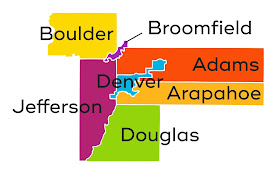
As usual, the seven-county Denver metro region provided 56 percent of the statewide vote. The following table shows the total 2026 primary vote for the seven metro counties in rank order of size and the Democratic vote for Senate.
The 590,000 metro voters in the Democratic U.S. Senate race was 66% of the statewide total. John Hickenlooper’s winning it secured his narrow victory. Michael Bennet’s losing it by 59% doomed him. Denver’s vote alone produced a quarter of the region’s Democrats and 18% of the statewide Democratic vote. Bennet lost Denver two to one.

Statewide statistics show unaffiliated voters an extremely important part of the Democratic vote. Sixty-four percent of unaffiliated voters took a Democratic ballot. Unaffiliated voters (388,000) were 43% of the total Democratic vote. They were 41% of the statewide vote but their turnout was somewhat less than partisans since they represent 52% of voter registration overall.
RELATED:
The 2026 Primary Turnout About Average July 21, 2026
Tuesday, July 28, 2026
Midterm Elections: Current Predictions
 United States Capitol
National Park Service photo by Mike Litterst
United States Capitol
National Park Service photo by Mike LitterstMidterm projections of the likely House and Senate seat swings in the 2026 November election are being published regularly. In the Senate, the Republicans continue to hold an advantage with most projections at best having a 50-50 Senate (3 seat swing to Democrats) with the VP having the tie vote and Republicans the right to control committees and the agenda. However, given President Trump’s weak allegiance from 2 or more Senators, it would be a difficult body to manage in 2027.
The House appears more likely to swing Democratic if the projections are correct. Democrats only need three seats for control and most projections are well beyond that number. If vacancies were filled, the current House would be 216 Dem. to 218 Rep.

The average first midterm election loss for the President’s party since LBJ in 1962 has been 22 House seats. The following chart shows some of the exceptional midterm swings. The 2026 midterm swing looks more modest due to the political system’s rigidity, polarization, negative partisanship, and state level redistricting.

RELATED:
Midterm Panic July 22, 2026
Midterm Elections: Tsunami or Minor Wave July 20, 2026
Monday, July 27, 2026
Colorado Party Disrupters
 Rep. Lauren Boebert, R-Colo., left, and Rep. Marjorie Taylor Greene, R-Ga., right, scream "Build the Wall" as President Joe Biden delivers his first State of the Union address to a joint session of Congress at the Capitol, Tuesday, March 1, 2022, in Washington. (Evelyn Hockstein/Pool via AP)
 Melat Kiros, a Democratic socialist running to unseat U.S. Rep. Diana DeGette, speaks from the steps of the Colorado State Capitol Sunday, June 14. (Adrian O’Farrill, Rocky Mountain PBS via the Colorado Capitol News Alliance)
Both of Colorado’s political parties have seen long-time incumbents lose primaries to outside the parties’ disrupters. In 2020, Lauren Boebert defeated 5-term Republican Congressman Scott Tipton. Closely associated with President Donald Trump, she was highly controversial and decided to switch to a safer district in 2024. She is currently the state’s most high-profile Republican but she is in some trouble with the MAGA base.
This year, 15-term Congresswoman Diane DeGette lost the Democratic nomination to non-politician and socialist Melat Kiros. She has received national attention and her socialist label and aggressive domestic and Middle East agendas will keep her in news. Kiros is already one of Colorado’s highest profile Democrats.

Friday, July 24, 2026
Could Boebert be Beaten?
 LEFT: U.S. Rep. Lauren Boebert. (Photo by Shaun Stanley/Special to The Denver Post) | RIGHT: Eileen Laubacher, the Democratic nominee in Colorado’s 4th Congressional District in the 2026 election. (Campaign handout)
 Colorado’s High Plains 4th Congressional District is the Republican Party’s safest seat. President Trump, while losing Colorado in all three of his elections, carried the 4th CD, including most recently by 58 percent to 40 percent for Kamala Harris (l54% Harris to 43% Trump).
Denver Post’s John Aguilar wrote a background on the 2026 race between Lauren Boebert and the new Democratic nominee Eileen Laubacher. His question was, “Is there a competitive contest?” The answer from CSU Professor Kyle Saunders and myself was possible but very unlikely, primarily because of the partisan advantage Republicans have in both registration and voting behavior.
Political analyst Floyd Ciruli also cautioned that cash alone may not be able to overcome the reality of the district’s political makeup. Republicans have 100,000-plus more registered voters than Democrats. “I’m not sure that money is the actual issue in this district,” Ciruli said.
Aguilar’s analysis pointed out:
- 2026 is likely to be a good Democratic year for winning House seats.
- Laubacher has $10.3 million compared to Boebert’s $1.1 million.
- Boebert has antagonized President Trump (Epstein investigation and support for Republican dissident Tom Massie). Is the base angry enough to send a Democrat to DC?
- Boebert did not secure an appropriation for a water pipeline in the District and could have even less clout in the next House.
- In spite of some advantages, Laubacher will need a very strong campaign message and ground game targeted at independents, moderates and people ready for a change. And a lot of luck.
Laubacher can pound themes on the campaign trail that are particularly salient to the largely agricultural district, Ciruli said, like high fuel and fertilizer prices in the midst of the U.S. war with Iran and added costs for farmers due to President Donald Trump’s tariffs. “You have to convince the farmer in Sterling or in Fort Morgan that they’re not getting enough representation and they need to move to a Democrat,” he said.
RELATED:
Boebert’s Last Term? April 6, 2023
Thursday, July 23, 2026
The Bennet Collapse
 U.S. Sen. Michael Bennet hugs his supporters after conceeding to Phil Weiser in the Democratic gubernatorial primaries on Tuesday. (Stephen Swofford/The Denver Gazette)
The narrative of Democratic politics since the New York mayoral election of November 2025 has been that of young idealistic voters challenging political establishments, especially urban, and winning. Seattle, Washington, D.C. and L.A. have seen several successful socialism espousing candidates. It just hit the Colorado June 30 primary, and incumbents and establishment politicians are out of office.
Thirty-year incumbent, Congresswoman Diane DeGette, was the most obvious casualty but Senator Michael Bennet was also a victim of the framework now established for Democratic primaries. As a long-time establishment D.C. politician, Bennet and his team planned to overwhelm his opponent, Attorney General Phil Weiser, with name identification, endorsements, and money. All normally critical but now seen as signs of the establishment and status quo.
Polling indicated he was a two-to-one leader for most of the last year and into early 2026. But when the polls showed the race tightening, he and his Super PAC ramped up negative ads and he loaned his campaign $1 million The public polling available and media reports described a close race the last two months. His position collapsed the final two weeks as undecided voters moved to Weiser. Most observers believed Denver was beyond his winning in early June. He lost in Denver two to one (66% to 34%), and the Denver region by 59% on his way to losing statewide by 14 points.

RELATED:
Bennet’s Luck Ran Out July 13, 2026
Polling and the New York Primary Warned the Establishment – Change is Coming July 6, 2026
Wednesday, July 22, 2026
Midterm Panic
 FIFA President Gianni Infantino, U.S. President Donald Trump, Mexican President Claudia Sheinbaum, and Canadian Prime Minister Mark Carney during the awards ceremony after the FIFA World Cup 2026 Final match between Spain and Argentina at New York New Jersey Stadium on July 19, 2026, in East Rutherford, New Jersey. | Andrew Harnik/Getty Images
President Trump is in major panic over likely midterm loss of the House and from some risk in the Senate. That panic is in spite of a slight improvement in approval rating and the generic ballot during the last two months, although both remain in the danger zone for a midterm House loss that would shift control.

The Hill website has released its Decision Desk Headquarters report showing that there is a 61% chance the Democrats take the House and a 57% probability the Republicans hold the Senate.
| DDHQ Report | ||
|---|---|---|
| Dem. | Rep. | |
| House | 226 | 209 |
| Senate | 50 | 50 |
Trump continues to work to increase the Republican advantage with state level reapportionment, various federal initiatives to influence the voting process and use of public relations events (World Cup).
Key factors helping the Democrats:
- Trump approval mostly at or below 40%
- The generic ballot test about 4 has been 7 on the averages.
- The unpopularity of the war in Iran and Trump performance on the economy.
RELATED:
National Dashboard: Trump Doesn’t Have the Cards May 26, 2026
National Dashboard: Iran Takes Trump Down Apr 6, 2026
National Dashboard: Trump in Retreat Feb 23, 2026
Trilogy on Trump’s Declining Approval Dec 15, 2025
Trump Approval Collapses and November 4 Turns Blue Nov 20, 2025
Tuesday, July 21, 2026
The 2026 Primary Turnout About Average
 A voter casts their ballot at a drop box in Denver on Election Day, Tuesday, Nov. 5, 2024, in this file photo. (AP Photo/Chet Strange, File)
The 35 percent turnout was predicted by this blog (The 2026 Democratic Primary Turnout) due to comparison with the similar highly-contested 2018 election. And indeed, while there were a few more voters in 2026, overall turnout percentage remained the same.
The late voter turnout has become common in contested elections when the candidates push and pull their votes to the polls. Campaigns with many volunteers and targeting young people especially tend to turn out late (i.e., mail arrives later and Monday and election day dropoffs ramp up). In Democrat primaries, that means the most liberal (2026 socialist) candidates tend to pick up votes as the counting includes later voters.

The general election turnout percentage tends to double from the primary. In 2018, the turnout of active voters in November was 75% of 2.5 million, and of active voters, 65% of 2.5 million of 3.9 registered million. Note: additional people registered between the primary and general election. It is likely the November 2026 turnout will double from the primary. Although there are few strongly contested partisan races expected, there will likely be well-funded ballot issue campaigns.
Monday, July 20, 2026
Midterm Elections: Tsunami or Minor Wave
 President Donald Trump speaks in the East Room of the White House, Thursday, July 16, 2026, in Washington. (Saul Loeb/Pool via AP)
The average first midterm election loss for the President’s party since 1962 has been 22 House seats. The following chart shows some of the exceptional midterm swings.

Is President Trump heading toward a 40 to 60 seat tsunami, or a more restrained 20 to 30 seat shift with a change in control of the House? Could the Democrats fail to win a majority?
Monday, July 13, 2026
Bennet’s Luck Ran Out
 U.S. Sen. Michael Bennet gives a concession speech to supporters of his campaign in the Democratic gubernatorial primary during his election night watch party at Schoolyard Beer Garden in Denver on Tuesday, June 30, 2026. Attorney General Phil Weiser defeated Bennet to become the Democratic nominee for governor. (Photo by AAron Ontiveroz/The Denver Post)
 Senator Michael Bennet was a surprise appointment by Governor Bill Ritter to the U.S. Senate in January 2009. His first election has been the only real contest in his Senate career. He won it in 2010 by less than 30,000 votes (against DA Ken Buck). Bennet had two subsequent easy races against weak Republican opponents in 2016 and 2022. He benefited from serving during Trump’s dominance of local party politics. Trump is a pariah and lost the 2016, 2020 and 2024 presidential elections in Colorado.
But Bennet’s luck ran out in the 2026 June primary for governor after his risky and mostly unexplained decision to compete for the about-to-be-vacant seat of termed out Governor Jared Polis. He began the quest in early 2025 as the frontrunner due to name identification and access to significant financing but quickly faced tough questions as to why he was challenging a popular Attorney General, Phil Weiser. With his low-key demeanor, questions were quickly raised as to what he had accomplished after seventeen years in Washington, and especially to oppose Donald Trump.
Bennet’s advantage in super PAC money, especially large gifts from high profile non-progressive Democrat Michael Bloomberg, helped alienate progressives and boost Weiser. Bennet, a stalwart member of the Washington and Democratic Party establishment, was in an election where a younger generation of Democratic and unaffiliated voters were entering the electorate and passionate about change and hostile to what they perceived as a status quo establishment.

The last time he lost this dramatically was his failed presidential race and withdrawal after earning less than 1 percent of the vote in New Hampshire in 2020. Bennet still has two years in his Senate term but this loss is a deep political wound. Due to his even temperament and thoughtful, moderate approach, he is more popular in the Washington policy community than Colorado. He has many options as former Colorado officeholders Gary Hart, Tim Wirth, Roy Romer and Hank Brown demonstrated, but it’s not likely to be in elective office.
RELATED:
Hickenlooper Narrowly Wins Last Term in Unruly Year July 8, 2026
Polling and the New York Primary Warned the Establishment – Change is Coming July 6, 2026
Friday, July 10, 2026
Dow Up in Spite of Uncertainty
 A view of commercial cargo vessels and crude oil tankers are anchored in the Gulf of Oman, off the coast of Muscat, Oman, on June 21, 2026. Photo: Shady Alassar, Anadolu Agency
The momentum for stocks, especially high tech, continues. The mid-year returns are at or near double digits with Dow and S&P up 9 percent and the NAZ ahead 13 points. The Dow, now above 52,000, is at its 18th record high for the year.

AI continues to drive the tech sector and uplift many others tertiary beneficiaries including small caps. Earnings growth has remained high. Consumers seem to be absorbing the inflation and the disruption of the Iran War appears to be dissipated through off-and-on negotiations. In spite of the world economic edginess, many analysts remain reasonably optimistic for the rest of the year.
But the market is likely to remain volatile. Interest rates, the AI surge, its durability and costs, and oil prices are all subject to unpredictable economic and geopolitical factors.
RELATED:
Dow Bounces Around 50,000 Jun 3, 2026
Market Ends Up Despite the Drama and Chaos Jan 7, 2026
Market Ends Up After Volatile Quarter Jul 3, 2025
Trump’s Agenda Could be Volatile for Market Dec 16, 2024
Thursday, July 9, 2026
We Will Not Wait
 Melat Kiros, center, joins Colorado Democratic leaders at a post-primary rally in Denver on Thursday. Photo: Alayna Alvarez/Axios
Melat Kiros joined her fellow Democrats in a unity rally immediately after the votes were counted. Her slogan, “We will not wait,” was still echoing through the state’s and the nation’s political establishment.
Denver Democrats often lead the country in breaking new political ground.
| Pat Schroeder | 1972 | "She wins we win" |
| Federico Pena | 1983 | "Imagine a great city" |
| Melat Kiros | 2026 | "We will not wait" |
RELATED:
Denver Makes Primary History and Leads the Progressive Pack Jul 2, 2026
Wednesday, July 8, 2026
Hickenlooper Narrowly Wins Last Term in Unruly Year
 U.S. Sen. John Hickenlooper, left, speaks to the crowd as former U.S. Sen. Ken Salazar watches on at Hickenlooper's primary election night watch party in Denver's Uptown neighborhood on June 30, 2026. (John Ingold, The Colorado Sun)
John Hickenlooper’s reelection this year appeared secure against an underfunded State Senator, but the anti-establishment wave affecting younger Democratic voters did raise anxiety. In fact, as the final count came in he only won by 6 points, hardly a landslide reelection.
Fortunately, Hickenlooper announced this is his last term. His 23-year political career has had considerable good timing and an unconventional start. He has become a brand and is well served by an unusual name and a slightly goofy persona.
He entered politics as a Denver barman advocating for lower downtown, parlayed it into a surprising but successful campaign for Denver Mayor in 2003. Good fortune came again when Governor Bill Ritter decided to stop after one term, making Hickenlooper the top choice in 2010, a chaotic year for the Republican Party. He won with 51 percent of the vote. Finally, the U.S. Senate became a possibility when Republican Cory Gardner defeated Senator Mark Udall in his 2014 reelection effort but could not withstand the anti-Trump wave in Colorado in his first reelection and lost to Hickenlooper.

How will Hickenlooper adapt to the new political environment? The 2028 presidential election, which will likely bring a Senate change in Colorado, should keep the state’s elections, at least primaries, in flux.
Tuesday, July 7, 2026
Five Observations from the Colorado Primary
Melat Kiros, a Democratic socialist running to unseat U.S. Rep. Diana DeGette, speaks from the steps of the Colorado State Capitol Sunday, June 14. (Adrian O’Farrill, Rocky Mountain PBS via the Colorado Capitol News Alliance)
Colorado 2026 primary hit local politics like a tsunami and kicked the door open for the national conversation on the direction of the Democratic Party. Five observations:
- Anti-Trump: Opposing President Trump was the top attitude Democrats wanted to see in their candidates. Weiser’s 66 lawsuits against Trump were worth millions from Michael Bloomberg.
- Anti-Establishment, Anti-DC: Michael Bennet not only is a long time member of the Washington, DC Democratic establishment. His strategy of a campaign with endorsements from leading politicians and funded by billionaires and corporate donors was exactly the wrong tone and vibe for this electorate.
- Ideology: First identified in New York, DSA members have been working steadily to impact the Democratic Party and had success. The Democratic Party’s lack of solutions for the affordability crisis, divisions on Israel, and apparent inability to inhibit Trump has become a major opportunity for far left and socialist appeals.
- Generation: The Millennial generation is now a major force in the electorate. They are 30 to 49 years old and with Gen Z, a younger cohort, are starting to dominate politics. Younger, more diverse, more liberal and digital, they want to shake up the system. Younger candidates with passion and outside-the-frame views are favored.
- Social Media: While television ads are still prolific in big money races and mailers locally, social media and digital ads are fueling the upsets and insurgencies in 2026.
RELATED:
Polling and the New York Primary Warned the Establishment – Change is Coming Jul 6, 2026
Denver Makes Primary History and Leads the Progressive Pack Jul 2, 2026
Millennials/Gen Z Getting into Politics Jul 2, 2026
Colorado’s Embattled Democratic Establishment Jun 25, 2026