 D1 candidate Melat Kiros' supporters cheer as a second round of election results dropped in her favor, widening her lead over incumbent Diana DeGette. June 30, 2026.
 Photo: McKenzie Lange/CPR News

 D1 candidate Melat Kiros' supporters cheer as a second round of election results dropped in her favor, widening her lead over incumbent Diana DeGette. June 30, 2026.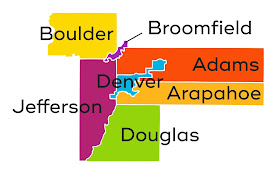
The concept of three funding tiers in the metro Denver area Scientific and Cultural Facilities District (SCFD) evolved after the district’s initial legislation was rejected by the Colorado legislature in the mid-80’s. Major cultural groups were unable to reach an agreement on the levels of funding prior to the first State Senate committee hearing.
The primary purpose of the legislation was to replace state and municipal funding for Denver’s major regional cultural facilities – the Denver Natural History Museum (now Denver Museum of Nature and Science), the Denver Zoo (now Denver Zoo Conservation Alliance), the Denver Art Museum, and the Denver Botanic Gardens. This group became Tier I with a set formula and an agreed division among the participants.
Sponsors and supporters recognized that as a regional tax district, the six suburban counties (now seven) should participate directly in funding and receive support for their local cultural organizations. They became the original second tier (later designated Tier III). Counties received funds to participate relative to the amount they contributed to the regional tax and within the purpose of the statute. Local elected officials (county commissioners) controlled distribution of those funds.
But a group of Denver-based cultural organizations wanted to share in the possible new tax dollars. The group was led by the Colorado Symphony and the Denver Center for the Performing Arts (DCPA) and included the Arvada Center for Arts and Humanities, two opera companies (Central City and Denver), the Denver Ballet (now Colorado Ballet), as well as the Children’s Museum. They were privately run nonprofits (except for the Arvada Center) that had received some government grants but not regular tax dollars. Additionally, they lacked broad regional appeal and had little track record of using tax dollars. The dominant impression of these group was that they procure their own support, mostly from wealthy patrons and donors.
The regional tax concept for cultural facilities was already a stretch for most Colorado legislators. Even though the four main Denver facilities had received regular tax funding from Denver and appropriations from the State – both funding streams ended or were greatly diminished in the 1980’s. This new group, which became labeled in the legislation as Tier II, had several statutory rules attached to make their entrance onto the tax rolls more acceptable and accountable. An annual threshold of $700,000 per organization was set and the amount received was based on an audience and budget audit. The intent was to promote access by creating an incentive for increased attendance, and also to demonstrate that the public attached particular value to the facility (i.e., ticket and attendance revenue). Budget requirements were important to ensure each would continue private development efforts. The concept would help attract audiences and avoid stagnant, narrow missions.
Does the Tier concept maintain value today?

Ultimately, SCFD awards are public taxpayer dollars. When the SCFD goes to voters for its periodic extensions, it must compete against other priorities for public funds. Organizations must justify the extraordinary grant of tax funding and demonstrate continued value to voters.
 Photo: Steve Gadomski
/
Adobe Stock
Photo: Steve Gadomski
/
Adobe StockShould the Scientific & Cultural Facilities District (SCFD) tax be permanent or continue the use of voter-approved term limits?
| Voters’ Views on Sunset Provision | Total | Dem. | Inde. | Rep. |
|---|---|---|---|---|
| Sunset: The cultural district has a sunset provision that means every twelve years or so metro residents get to vote for or against extending the tax. They have extended it three times in elections starting in 1988. [ROTATED]. | ||||
| The district tax should be made permanent. The voters support it, it’s needed and it works. We don’t need more elections to extend the tax. | 20% | 24% | 16% | 19% |
| The district tax should be voted on every 12 years or so to make sure it keeps working the way we want it to and is still needed. | 78 | 72 | 82 | 78 |

The Scientific & Cultural Facilities District (SCFD) is the Denver metro area’s nationally recognized source of regional funding for cultural facilities and programs. It was from the beginning designed with important guidelines that have maintained it as a unique and nationally envied model. As it approaches a 2028 renewal campaign, it will be important to keep them front and center.
SCFD Operational Guidelines:

Mike Johnston will run for reelection and two far-left candidates have announced: Lisa Calderon, a perennial candidate who ran a strong 3rd place finish in 2023 (see table), and Shontel Lewis, a “progressive” city council member.

Denver’s politics has moved left in the last decade as reflected in increased Democratic vote percentages for statewide and federal candidates and, most recently, the 2026 Democratic primary, where an outside Democratic Socialist defeated an incumbent congresswoman.
As the incumbent, Johnston, who is a left-center politician, is handicapped as a prima facia member of the establishment and not left enough for the “We Will Not Wait” wing of the Denver Democratic Party. Although the two far-left candidates will likely split the “progressive” vote, if there is a runoff, the incumbent will be challenged by a more united left.